
The Brands Factory — field guides to brand building
Brands aren’t born. They’re built.
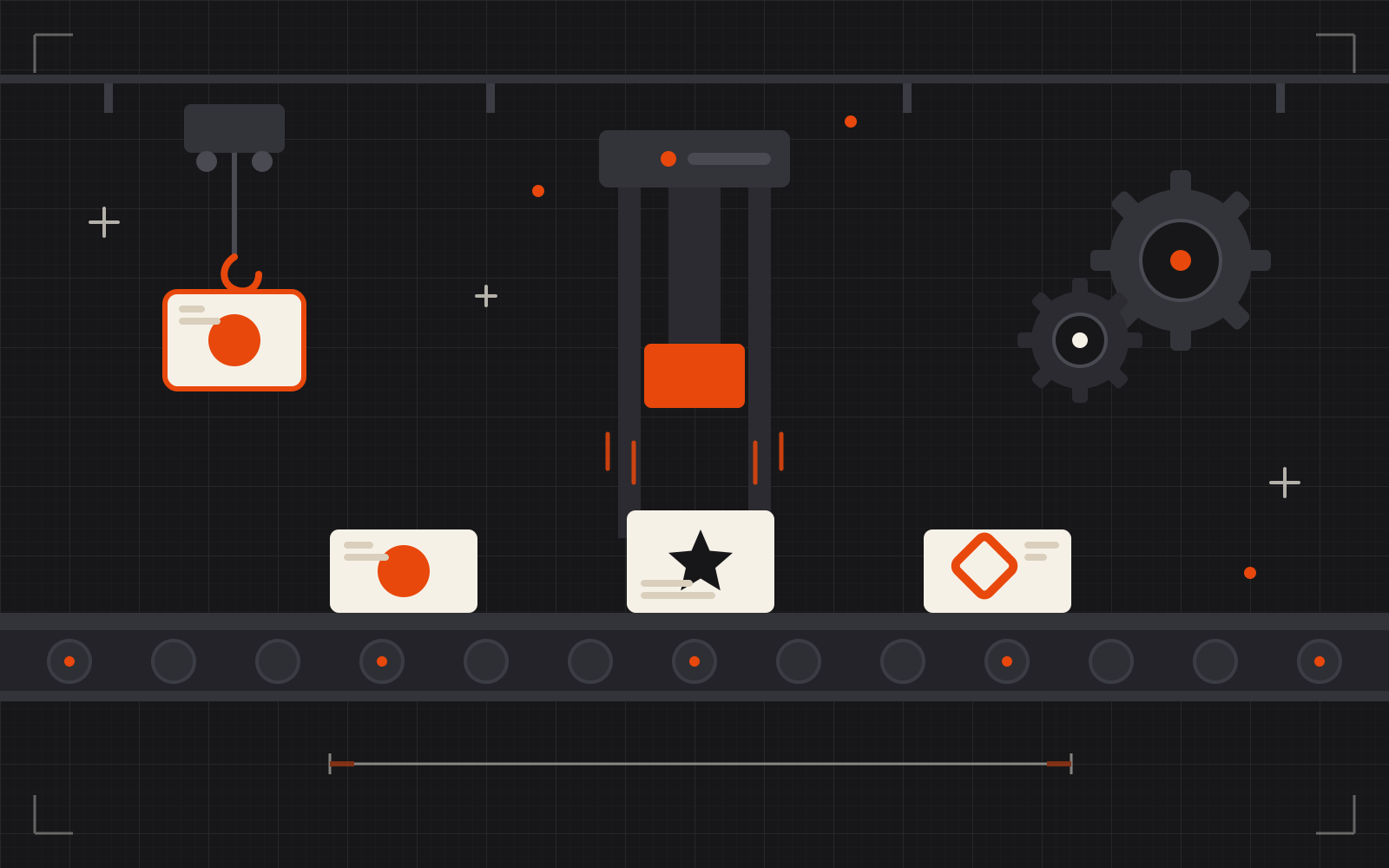
Every strong brand is manufactured: researched, positioned, designed, documented and maintained. The Brands Factory is an independent library of practical guides covering that whole production line — from first positioning workshop to full rebrand.
Section 01 — The guides
Four stations of the production line
Each guide covers one stage of brand building in depth — what it is, what decisions it involves, and how to do the work in the right order.
Brand Strategy
Positioning before pixels: audience research, competitive frame, value proposition and the one-page strategy statement.
Read the guide GUIDE 02Brand Identity
Name, logo, color, typography and voice — the sensory kit that makes a brand recognizable at a glance.
Read the guide GUIDE 03Brand Guidelines
The rulebook that keeps a brand consistent: what a brand book contains and how much documentation is enough.
Read the guide GUIDE 04Rebranding
When rebuilding a brand is justified, how to audit what to keep, and how to roll out the new identity without losing equity.
Read the guideSection 02 — The process
How a brand gets manufactured
Skip a station and the defects show up later — a logo nobody can explain, a launch nobody notices, an identity that drifts. The order matters.
Research
Customers, competitors and category conventions are mapped before anything is designed.
Strategy
Positioning, audience and value proposition are fixed in a short written statement.
Identity
Name, mark, color, type and voice are designed to express the strategy.
Guidelines
The system is documented so everyone applies it the same way, every time.
Upkeep
The brand is applied, measured and refreshed — and rebuilt only when strategy demands it.
Section 03 — First principles
What a brand actually is
A brand is not the logo, the product or the advertising. It is the set of associations a person carries about a business — the shortcut their memory uses to decide whether to trust, choose and pay more for one offer over another.
Those associations are built from every touchpoint: the name heard in conversation, the packaging on a shelf, the tone of a support reply, the invoice footer. Brand building is the discipline of designing those touchpoints deliberately instead of accidentally.
A working definition. The American Marketing Association defines a brand as “a name, term, design, symbol, or any other feature that identifies one seller’s good or service as distinct from those of other sellers.”
Identification is the core function: a brand exists so buyers can tell one offer apart from the alternatives — quickly, reliably, and in the brand’s favor.
Section 04 — House principles
Three rules the whole library follows
✓ Strategy before pixels
Design decisions are answers to strategic questions. If a choice can’t be traced back to positioning, it’s decoration.
✓ Distinctiveness beats beauty
A brand’s job is to be recognized and remembered. Familiar category conventions blended with one ownable, unusual asset beat generic prettiness every time.
✓ Consistency compounds
Recognition is built by repetition over years, not by a single launch. The cheapest brand asset is the one you already have, applied consistently.
Section 05 — FAQ
Questions that come up every time
What is the difference between a brand and a logo?
A logo is one visual identifier — a mark, symbol or wordmark. A brand is the full set of associations people hold about a business: its name, visuals, voice, product experience and reputation. The logo is a trigger for the brand, not the brand itself.
What comes first: strategy or design?
Strategy, always. Positioning, audience and value proposition decisions define what the identity must communicate. Designing a logo before those decisions are made produces decoration, not identification.
What do brand guidelines usually contain?
A brand book typically documents logo versions and clear space, minimum sizes, color values for print and screen, typography and hierarchy, imagery and icon style, tone of voice, layout templates and explicit misuse examples.
When should a company consider rebranding?
Legitimate triggers include a merger or acquisition, a changed business model or market, a name that no longer fits the offer, legal or trademark conflict, and an identity so dated it actively misrepresents the product. Boredom with the current look is not a sufficient reason.
What is brand positioning?
Positioning is the deliberate choice of the place a brand occupies in a customer’s mind relative to alternatives: who it is for, what category it competes in, what benefit it leads with, and why that claim is believable.
Does a small business need branding?
Yes, but scaled to reality. A small business needs a clear name, a consistent look, a recognizable voice and a documented set of basics — not a 200-page brand book. Consistency across every customer touchpoint matters more than polish on any single one.
Section 06 — About the site
An independent reference shelf
The Brands Factory is not an agency and sells no services. It is a small, carefully edited reference shelf on brand building — written for founders, marketers and designers who want the fundamentals stated plainly, without a sales pitch attached.