
Home / Guide 04 / Rebranding
Rebranding: rebuild only when the strategy demands it
A rebrand is the most expensive way to fix some problems and the only way to fix others. This guide covers when it is justified, what to keep, and how to roll out the change without burning the recognition you already own.
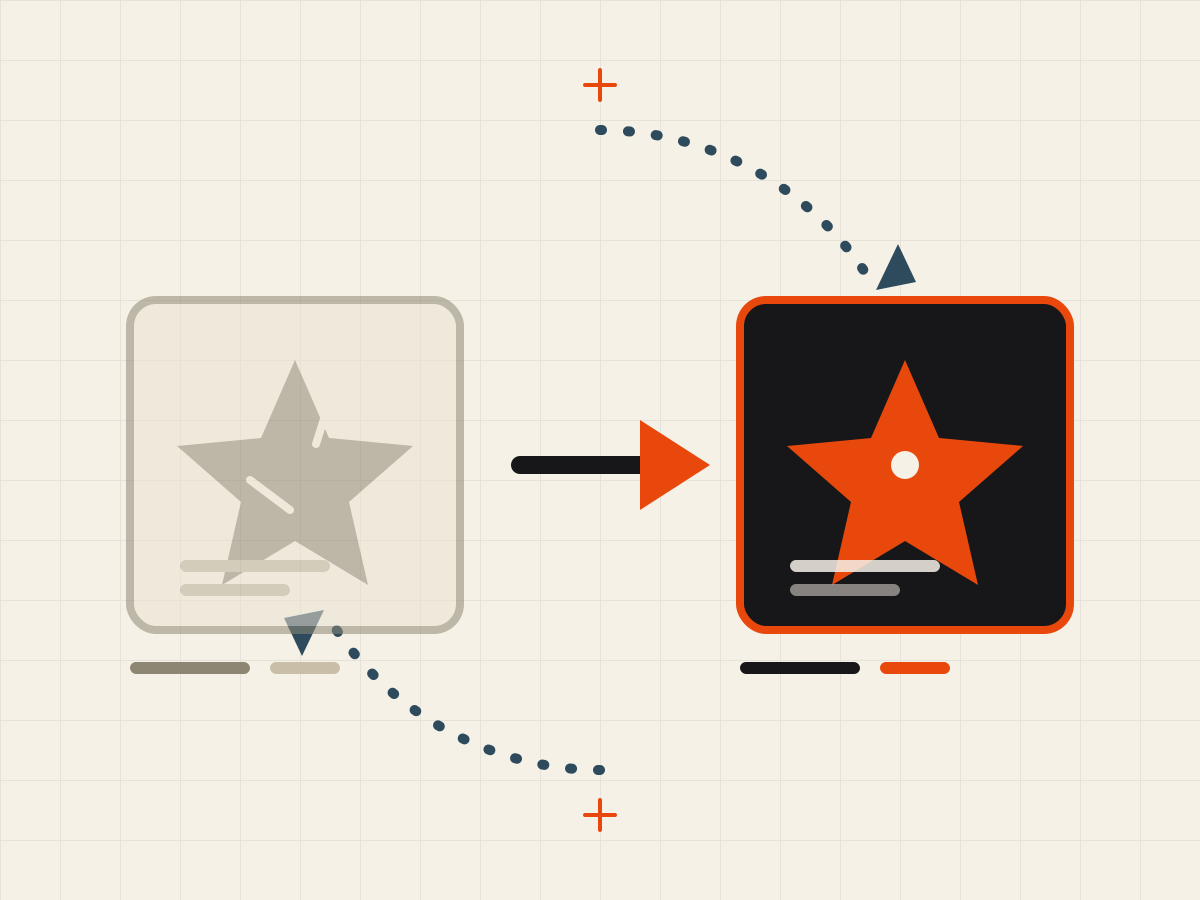
Legitimate triggers — and one that is not
Rebranding is justified when the current identity actively blocks the strategy:
- The business changed. A merger, acquisition or new core offer makes the old name or positioning factually wrong.
- The market changed. The brand is filed by buyers in a category it has outgrown or no longer wants to compete in.
- Legal pressure. A trademark conflict or a name that cannot be protected in new markets.
- Reputation damage so severe that the existing associations cost more to repair than to replace.
- The name caps growth. A geographic or product-specific name (a city, a single product) that misleads the next audience.
The trigger that is not legitimate: boredom. Teams see their own identity thousands of times and tire of it years before customers even notice it. Boredom is fixed with fresh campaigns, not a new brand.
Audit the equity before touching the identity
Brand equity is the recognition and goodwill already accumulated — and it lives in specific assets, not in the brand as a whole. Before redesigning anything, inventory what customers actually use to identify you: the name, a color, a shape, a jingle, a packaging structure, a tone of phrase. Research is simple in principle: show customers candidate elements with the name covered and see what still identifies the brand.
The audit sorts every asset into three buckets: keep (distinctive and recognized), evolve (recognized but dated), and discard (neutral or damaging). Most failed rebrands skipped this step and threw a “keep” asset away.
Refresh vs. full rebrand
| Brand refresh | Full rebrand | |
|---|---|---|
| What changes | Visual polish: refined mark, updated palette and type, modernized applications | Strategy and identity together — sometimes including the name |
| When it fits | Positioning is still right; execution has gone dated | Positioning itself is wrong or the name caps the business |
| Recognition risk | Low — distinctive assets are retained | High — must be managed with transition design and communication |
| Typical cost | Weeks of design work, staged rollout | Months of strategy, legal, design and a coordinated global rollout |
When the trigger is cosmetic, refresh. Full rebrands are for strategic problems.
Two cautionary tales worth knowing
Gap, 2010. Gap replaced its long-standing blue-box logo with a new wordmark without warning or explanation. The reaction from customers was immediate and hostile, and the company reverted to the previous logo within about a week. The lesson: a recognized mark is an asset with owners — the customers — and abrupt replacement reads as destruction of something they trusted.
Tropicana, 2009. PepsiCo redesigned Tropicana’s packaging, dropping the iconic orange-with-a-straw image for a glass of juice and a new wordmark. Shoppers could no longer find the product on the shelf; unit sales fell sharply — widely reported as around 20% in the following weeks — and the company restored the previous packaging within two months. The lesson: on a shelf, packaging structure and imagery are the brand; change the recognition cues and you hide your own product.
Rollout: sequence beats spectacle
- Strategy first. Re-run the strategy process from Guide 01 with current data; a rebrand on stale positioning just changes the wrapper on the same problem.
- Legal clearance. Trademark screening before any name or mark is shown outside the building.
- Transition design. Where recognition risk is high, carry one bridge element — a color, a shape — from old to new so the change reads as evolution.
- Inside before outside. Employees hear the reasoning first, with the new guidelines in hand; a rebrand explained badly internally is leaked badly externally.
- Sequenced launch. High-traffic touchpoints first (site, app, packaging), long-tail assets on a published schedule, and old-asset usage retired by a date certain.
- Measure. Track branded search volume, direct traffic and recognition metrics before and after, so the rebrand is evaluated on data rather than on the loudest comment thread.
The equity rule. Every distinctive asset you discard must be replaced by a deliberate plan to build a new one. Recognition destroyed in a week takes years to earn back.